
Charles Spencer Chaplin was born in London on 16 April 1889. His parents, Charles and Hannah, were both music hall performers. They separated when Charlie was very young.
Hannah raised Charlie and his older half-brother Sydney on her own, moving from one lodging to another. In 1895, Hannah was admitted to the first of several institutions after a serious mental-health crisis. The boys were also sent to institutions, including Hanwell Schools, an institution for poor or destitute children. In 1901, when their father died, Sydney was 16 and Charlie was 12 years old.
By then, Charlie had already been performing on stage for a few years.


At the age of nine, Charlie joined the Eight Lancashire Lads, a troupe of young clog dancers. He toured the music halls of England, learning the importance of timing as naturally as other children learnt to read.
He played Billy the page boy in stage productions of Sherlock Holmes, touring in Britain and appearing in London. He also joined Casey’s Circus, developing his skills in burlesque, physical comedy and imitation. In 1908, he joined the Fred Karno Company, named after the leading impresario of the British music hall, and quickly became one of its leading performers.
There, he learned the precision that lay behind physical comedy. A fall is never simply a fall: behind every apparently effortless gag is a finely judged sense of timing.


During his second tour of the United States with the Karno troupe, Chaplin was spotted by representatives of the Keystone Film Company and was offered a contract by the company run by Mack Sennett.
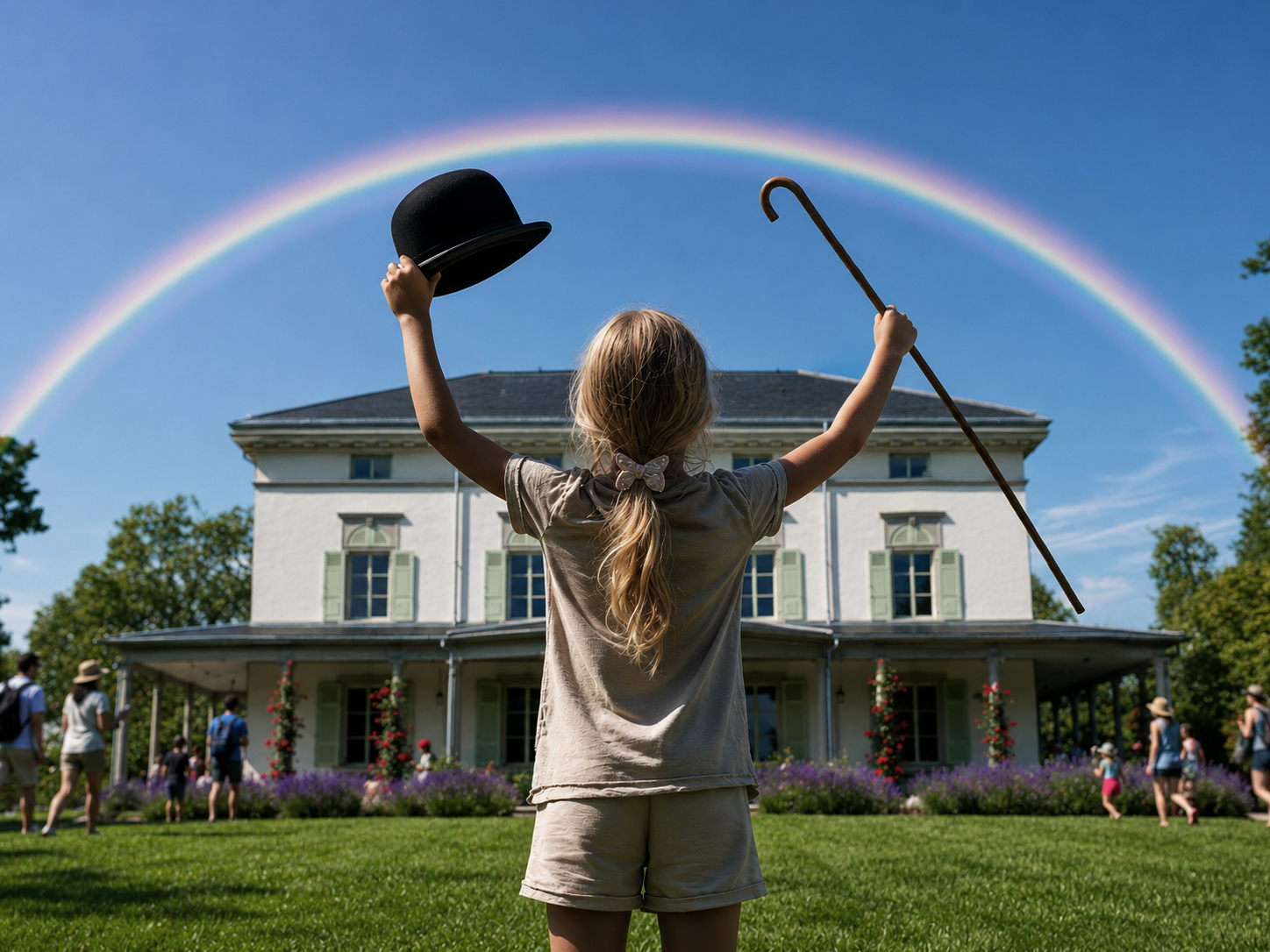
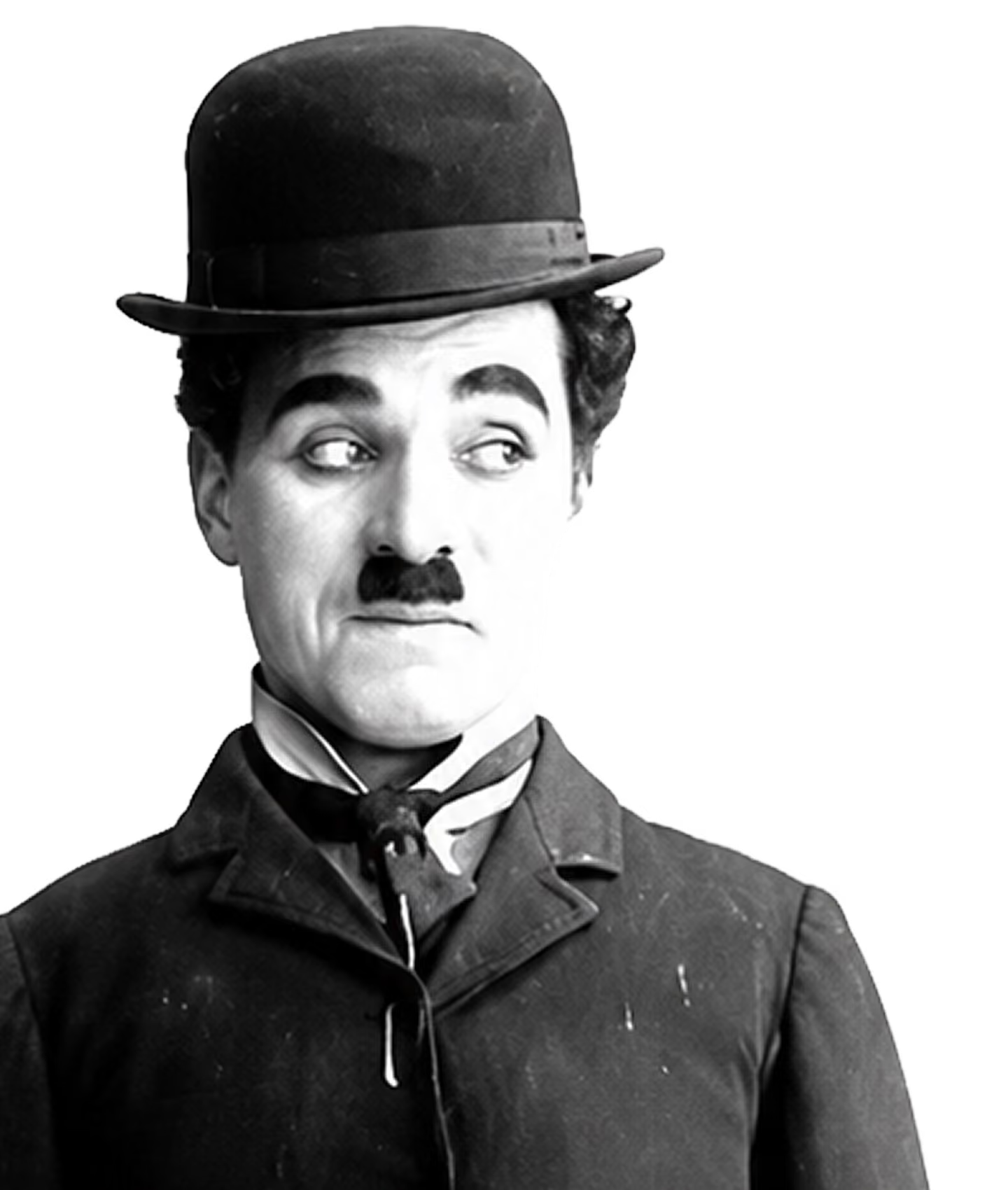
In January 1914, the famous tramp costume was assembled for Chaplin‘s second Keystone film. He assembled shoes several sizes too large, trousers that were too wide, a jacket that was too tight, a bowler hat and a cane. He added a moustache small enough to leave his expressions visible.
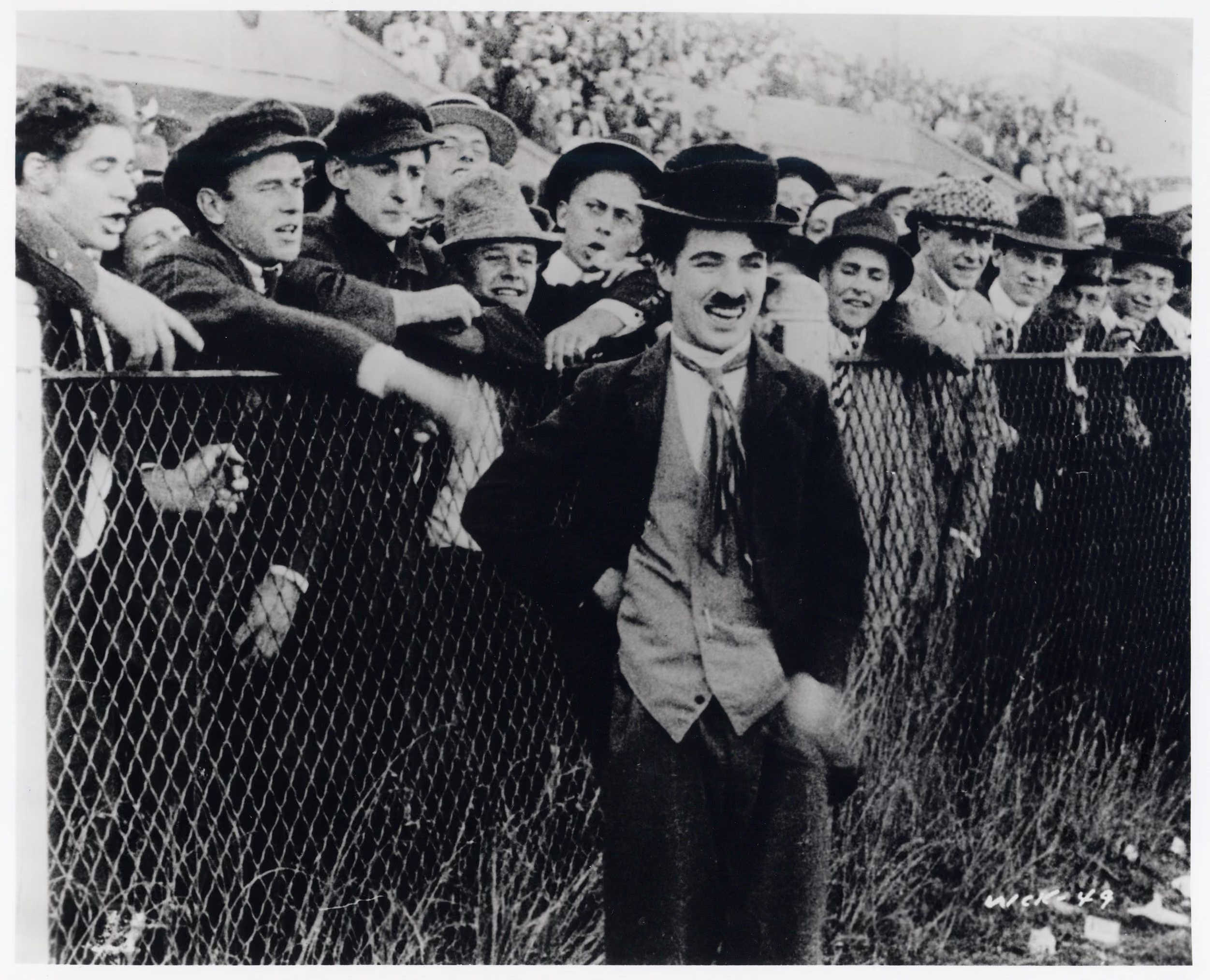
The character appeared on screen in Kid Auto Races at Venice. The figure known in English as the Tramp, and in French as Charlot, quickly became recognisable far beyond Hollywood.
Chaplin made dozens of films during his first year with Keystone. A character was born, but so was a new cinematic language. At a time when screen comedy relied heavily on broad slapstick, Chaplin’s genius lay in pantomime – in the expressive subtlety of movement and gesture, which gave the character his extraordinary depth.
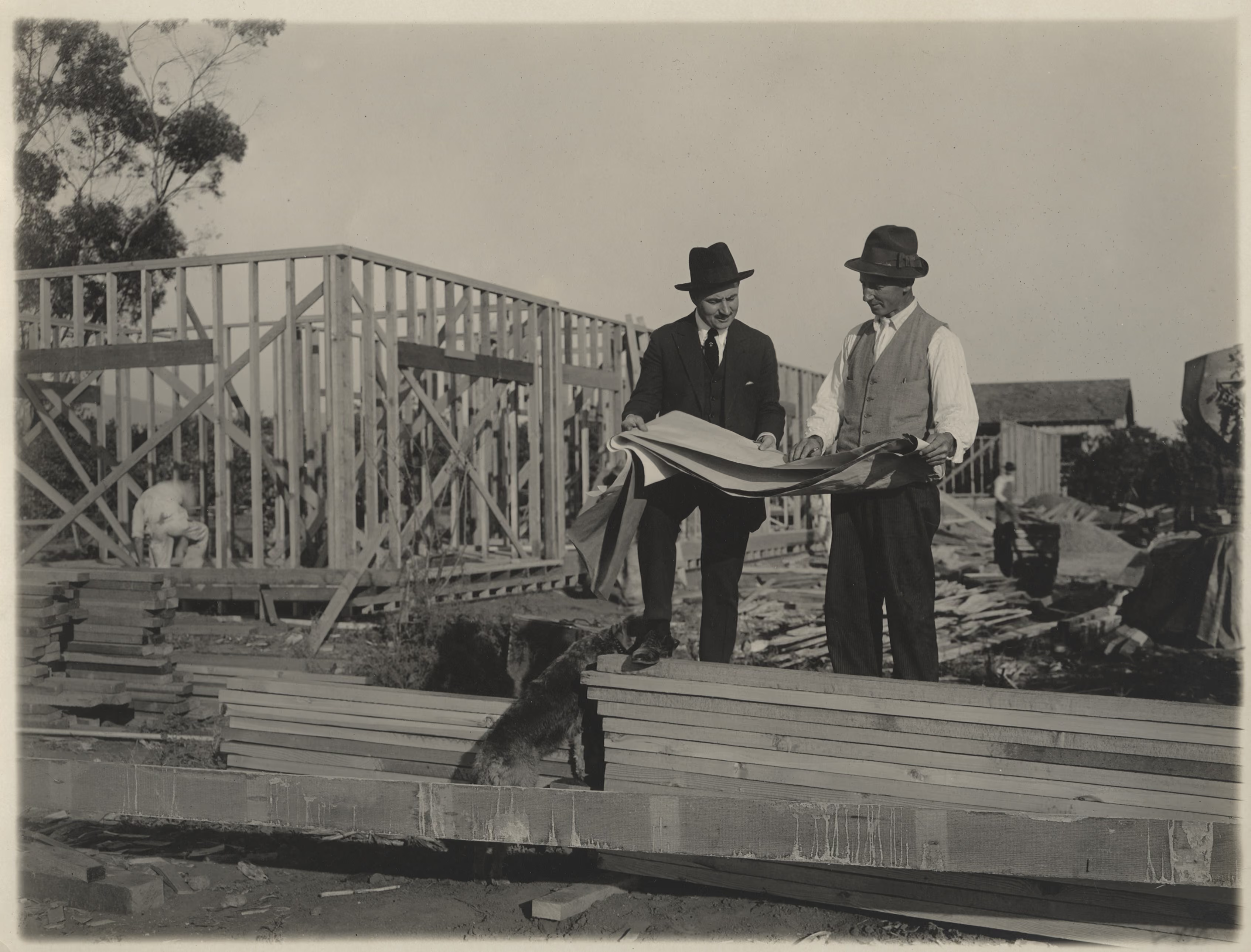
In pursuit of his dream of independence, Chaplin left Keystone for Essanay Studios in 1915, then moved to the Mutual Film Corporation in 1916. In 1918, he signed a distribution agreement with First National Pictures. Each move gave him more control and greater freedom over his work, as well as more time between pictures.
The Tramp, in 1915, gave the character an ending that was not a joke. He walked away down an empty road. The Immigrant, in 1917, showed a boatload of arrivals being herded like cattle within sight of the Statue of Liberty.
In 1918, Chaplin built his own studio on La Brea Avenue in Los Angeles. He was no longer simply performing in films; he was shaping every aspect of their creation.

In 1919, Chaplin co-founded United Artists with Douglas Fairbanks, Mary Pickford and D. W. Griffith. Together, all four took greater control over the distribution of their own work.
That same year, Chaplin experienced a profound personal loss. His first son, Norman Spencer Chaplin – born to his first wife, Mildred Harris – died in July 1919, three days after his birth. Soon afterwards, he began work on The Kid, the story of a man raising a child who is not his own. Released in 1921, the film became one of the great successes of the decade.
The Gold Rush followed in 1925 – during its production, Chaplin married his second wife, Lita Grey, with whom he had two sons, Charles Jr and Sydney – then The Circus in 1928, whose own troubled production was overshadowed by the couple’s highly publicised divorce.
Chaplin wrote, directed, produced and performed. During the 1930s, music became an increasingly important part of his creative language.


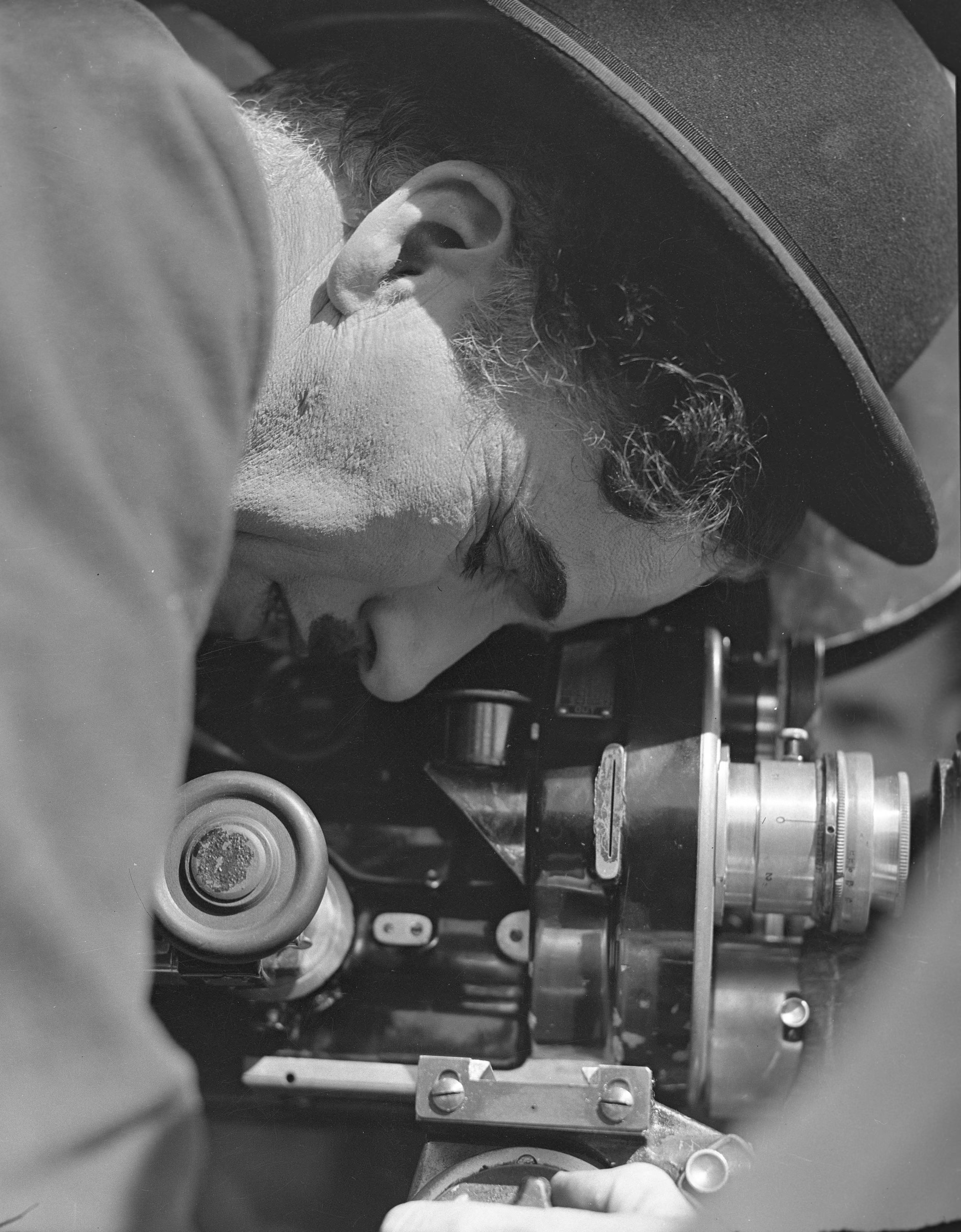
Sound arrived in cinema in 1927. Chaplin was deeply reluctant to embrace it, believing that non-verbal expression was more profound and precise. But audiences and the film industry increasingly came to see sound as the future of cinema.
Chaplin was caught between his commitment to silent pantomime and the changing demands of the medium.
City Lights was released in 1931 as a silent film accompanied by a score composed by Chaplin himself. Modern Times followed in 1936, when silent cinema had almost disappeared. It also marked the first of two screen appearances by Paulette Goddard, Chaplin's partner at the time and, by most accounts, his third wife; she appeared alongside him again, four years later, in The Great Dictator.
For the first time, Chaplin’s voice was heard in one of his films. He sang in invented words, cleverly using sound without abandoning the Tramp’s universality.
He had waited years to speak. When he finally did, he chose words no one needed to translate.
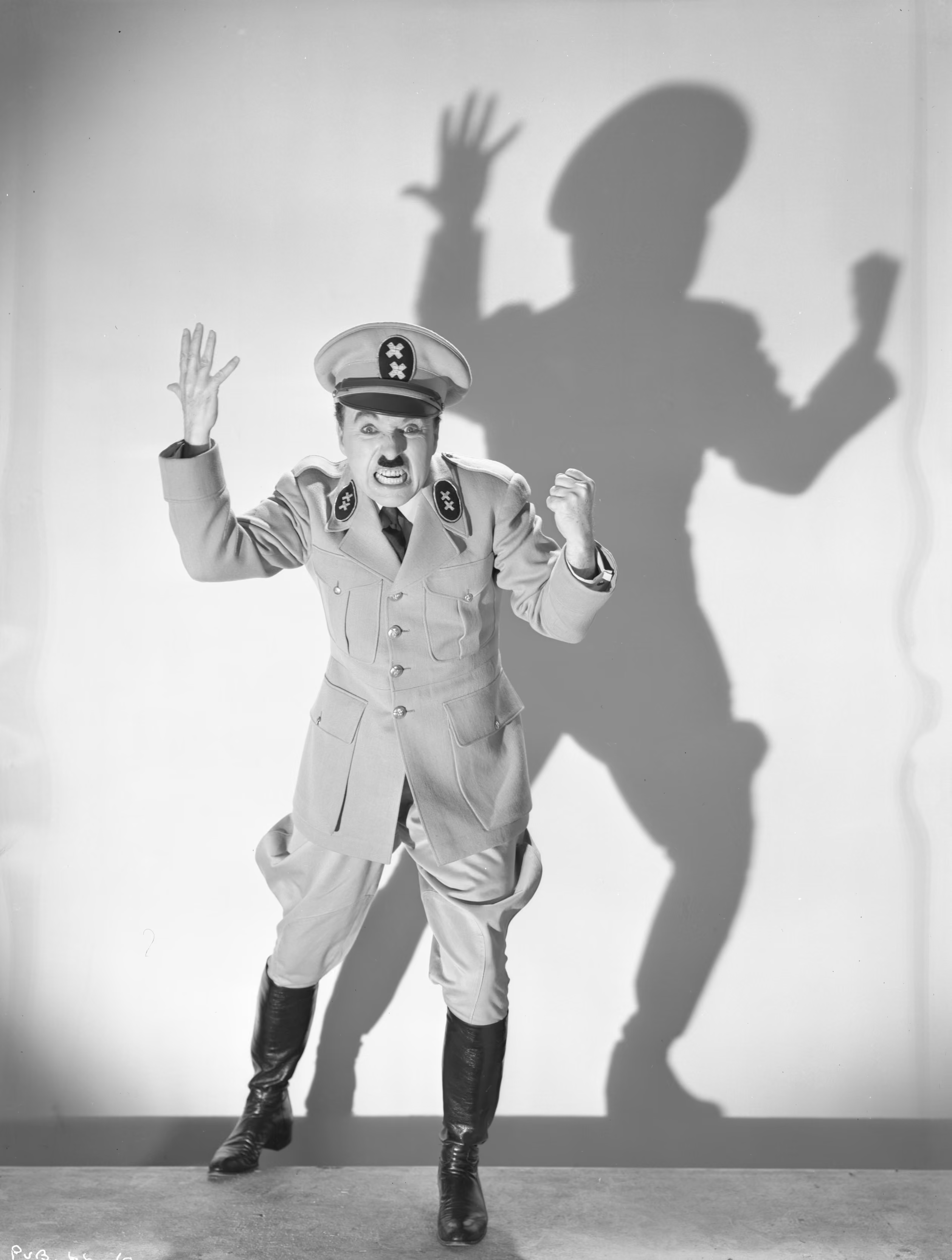
In The Great Dictator, Chaplin played two roles: a Jewish barber and the dictator Adenoid Hynkel.
It was his first fully spoken film, released in October 1940, more than a year after the beginning of the Second World War. Comedy, satire and political observation came together in a film that directly confronted the rise of totalitarianism.
The film closes with Chaplin addressing the camera directly, stepping beyond the character to speak to the audience in his own voice.
Limelight followed in 1952, drawing on the world of the London music halls of his childhood.


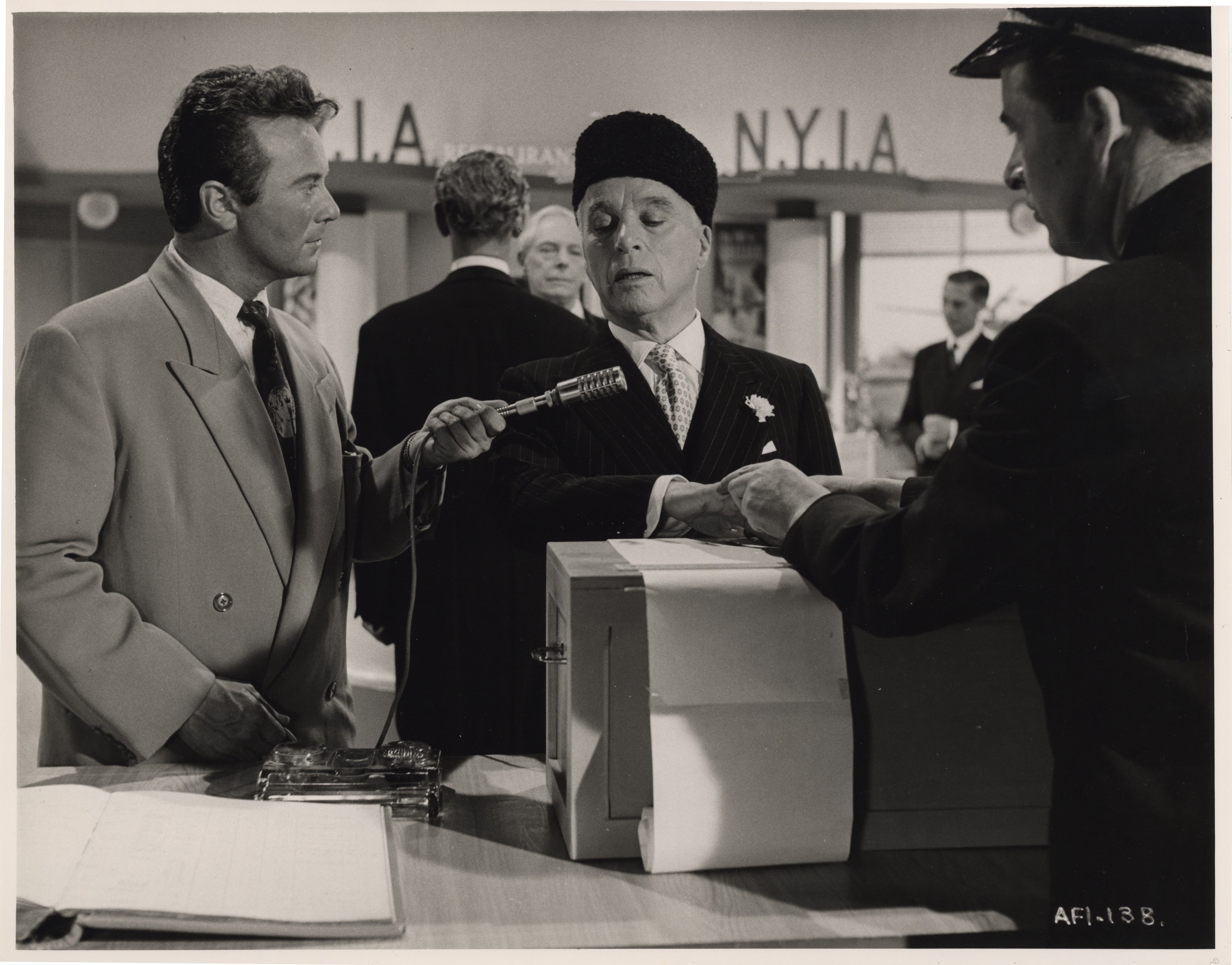
Chaplin had lived in the United States for almost forty years without ever becoming an American citizen.
In the tense political climate of the post-war years, his independence, his views and his public positions increasingly made him a target. In 1947, Monsieur Verdoux faced protests and boycotts in several American cities, amid growing hostility towards Chaplin’s political views.
In September 1952, Chaplin left the United States with his family to present Limelight in London. During the crossing, his re-entry permit was revoked. He was informed that he would have to answer questions before being allowed to return.
He chose not to.
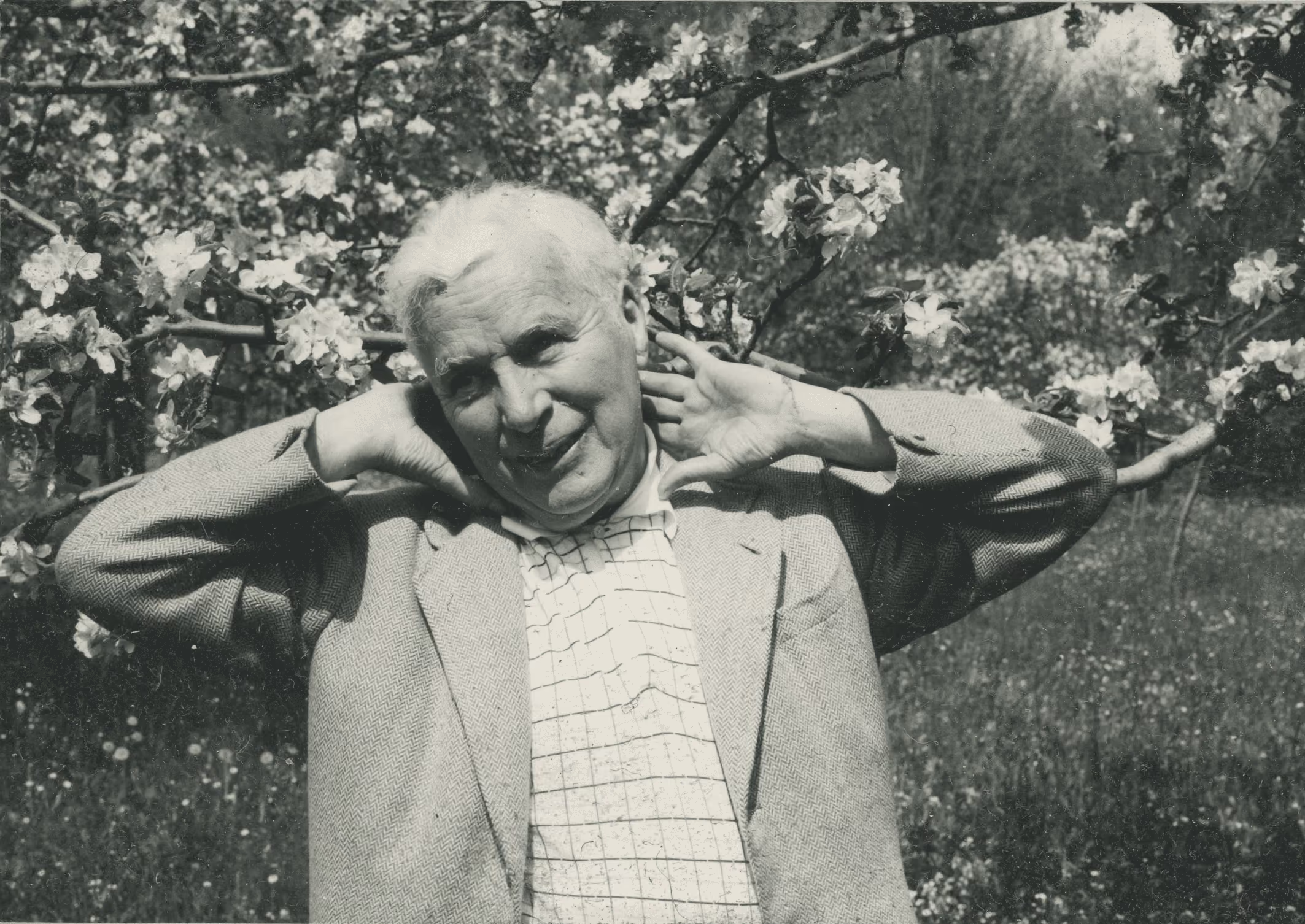
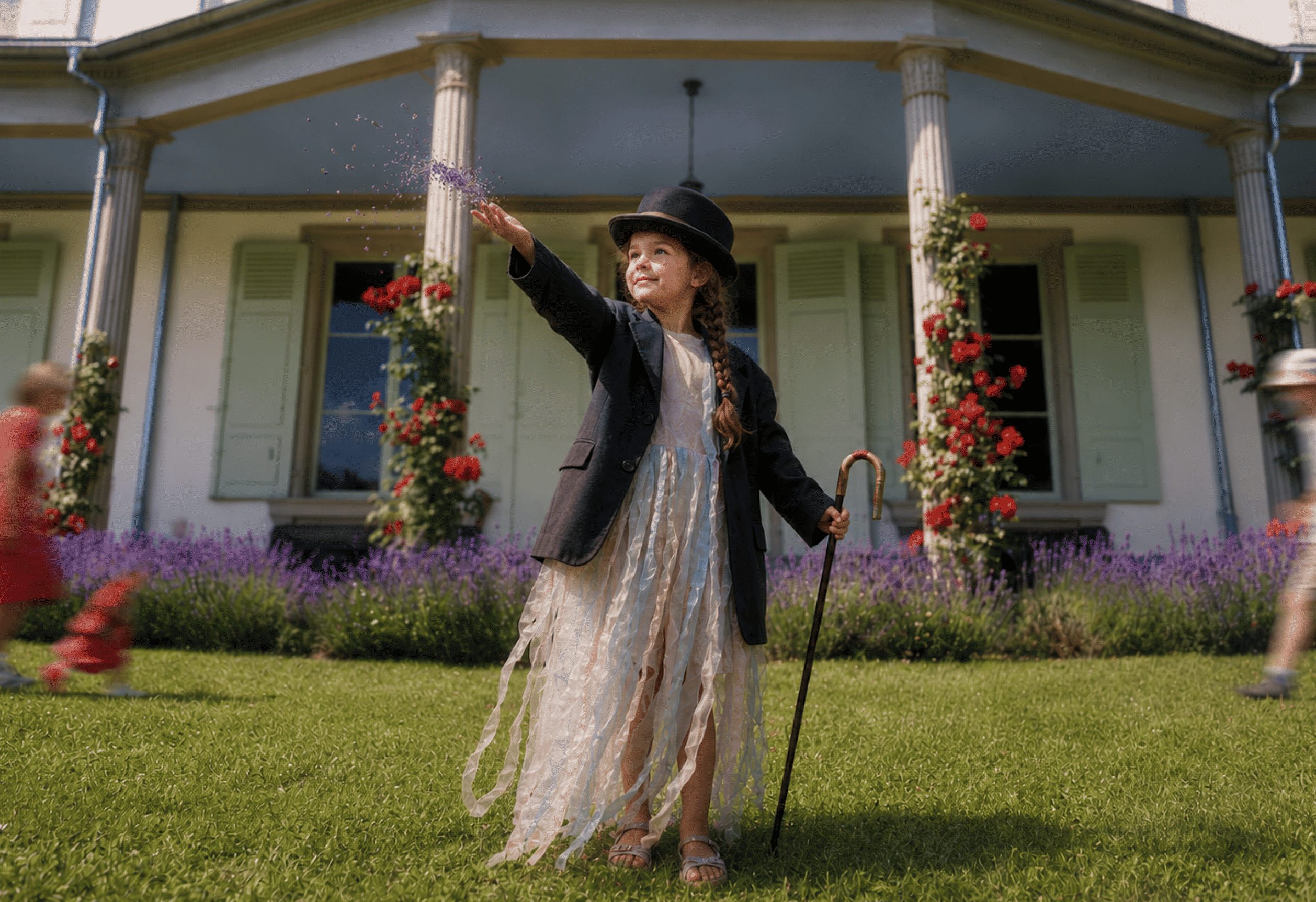
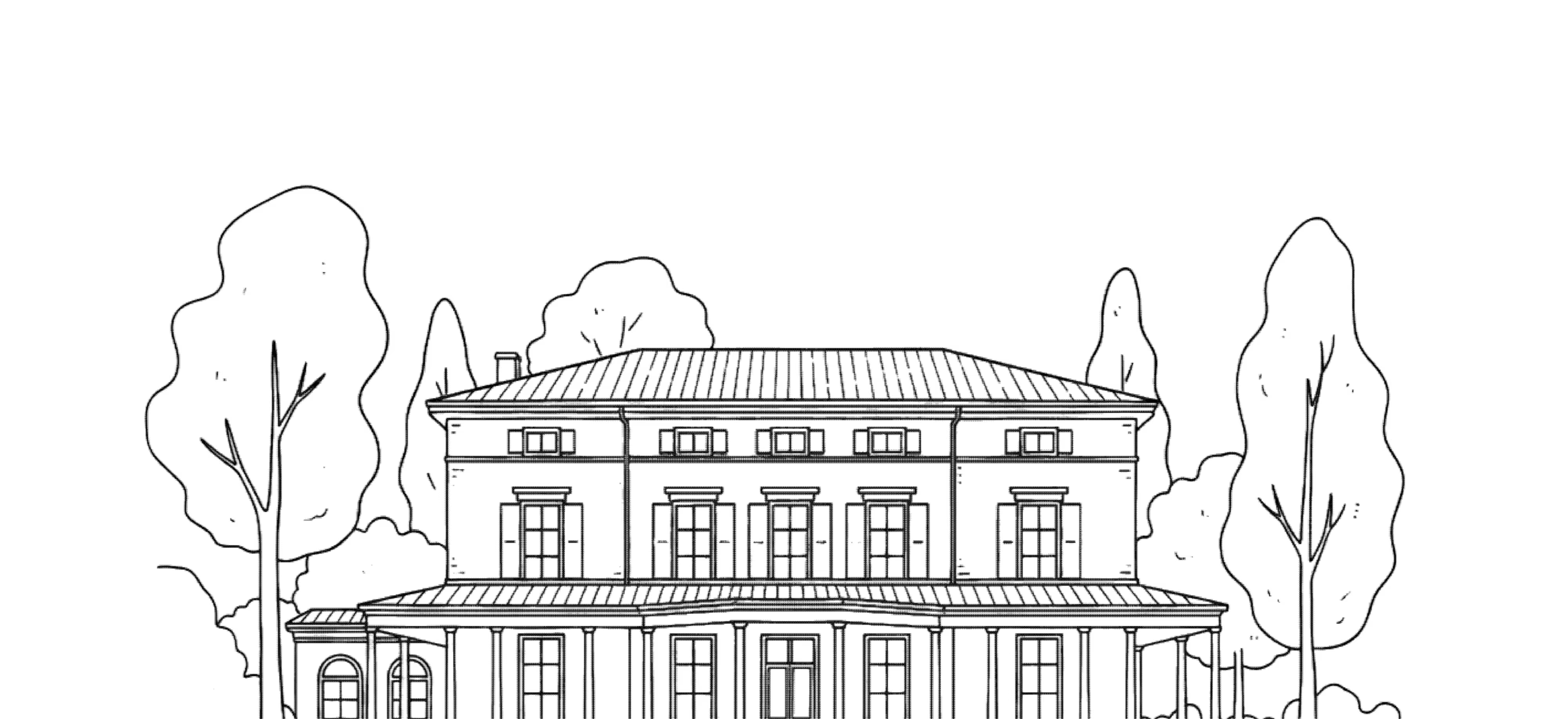
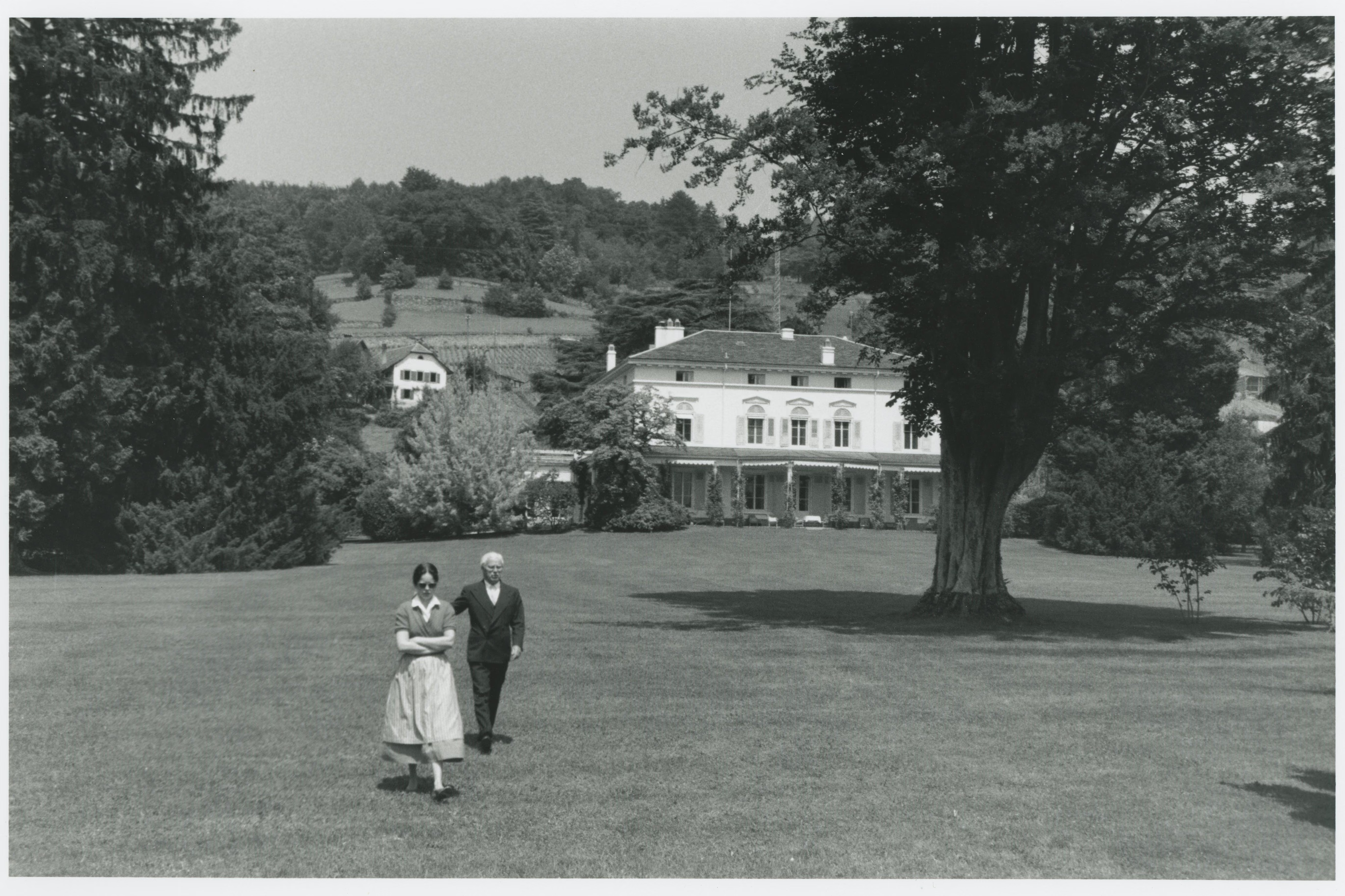
In January 1953, Chaplin settled with his family at the Manoir de Ban in Corsier-sur-Vevey. The nineteenth-century residence stood within fourteen hectares of parkland overlooking Lake Geneva and the Alps.
He was sixty-three. He would spend the last twenty-four years of his life there, longer than he had lived anywhere else.
His wife, Oona O’Neill, whom he married in 1943, was the daughter of playwright Eugene O’Neill. Together, Charlie and Oona raised a family of eight children and remained together for the rest of his life.
At the Manoir, family life and creative life continued side by side. No longer at the helm a film studio, Chaplin turned instead to writing – new film projects and, in 1964, his autobiography. He wrote and produced A King in New York in 1957 and A Countess from Hong Kong in 1967, his final film.
He also returned to the films that made him famous, composing and recording new scores for his silent work and continuing to write well into his eighties.
The world knows The Tramp. Here, at the Manoir, another part of Charles Chaplin’s life took shape: the husband, the father, the composer, the writer, and the man surrounded by family.


In April 1972, Chaplin returned to the United States for the first time in twenty years to receive an Honorary Academy Award.
The return marked a striking reversal. The country he had left in 1952 now celebrated his contribution to cinema.
Three years later, in 1975, Queen Elizabeth II knighted him for his contribution to the arts.
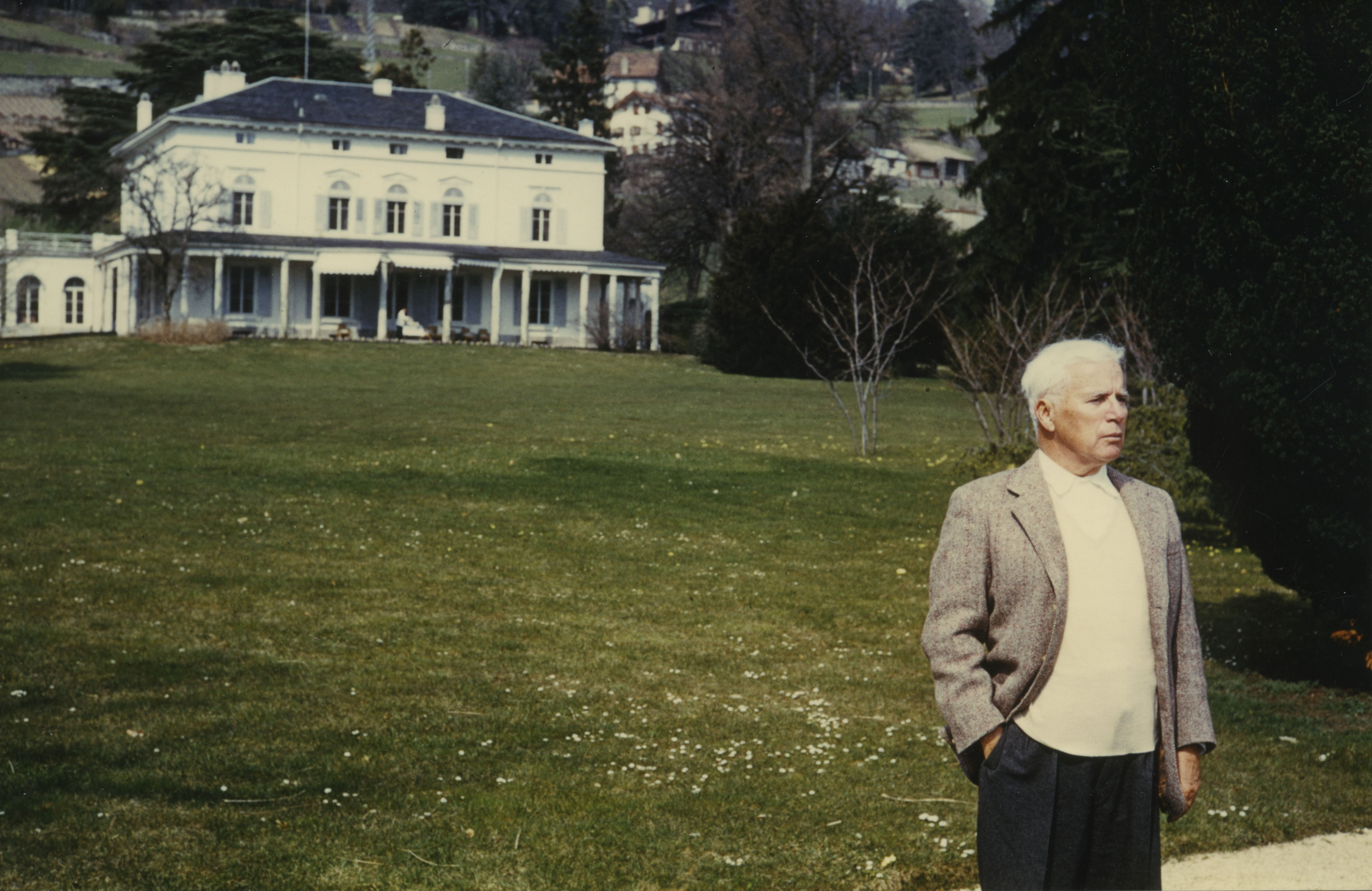
Charles Chaplin died at the Manoir de Ban on 25 December 1977, at the age of eighty-eight.
Oona remained at the estate until her own death in 1991.
The place where Chaplin spent the final decades of his life is now open to visitors.
His films are still shown, still funny, and still unsettling in precisely the ways he intended.
Born into poverty in London, Chaplin spent his life observing the world from the perspective of those with less power. He turned that gaze into comedy, movement and cinema.
More than a century after the Tramp first appeared on screen, the gestures still work. The laughter still travels. And above Lake Geneva, the Manoir where Chaplin spent the last chapter of his life remains a place to discover.